
A quarter into the 21st Century, architecture continually finds itself entangled in a host of planetary-scaled issues—climate crises, energy deficits, and associated ecological risks; pressure on global material and logistical exchanges; ever-growing global information infrastructures, and other emergent techno-social conundrums of the post-digital age. Architecture (as object) is often the venue through which such overlapping conditions play out and architecture (as discipline) is uniquely equipped to project inventive ways of thinking and being within them. As a fundamentally relational discipline, Architecture affords a deep understanding of the ties between things, but also how they might be rearranged to alternative ends. This affordance situates one of architecture's fundamental tasks: as a discipline that inhabits the complicated present through an imagination of the future, it conjures–through material and representational interventions–what does not yet exist, bringing it to bear on reality.
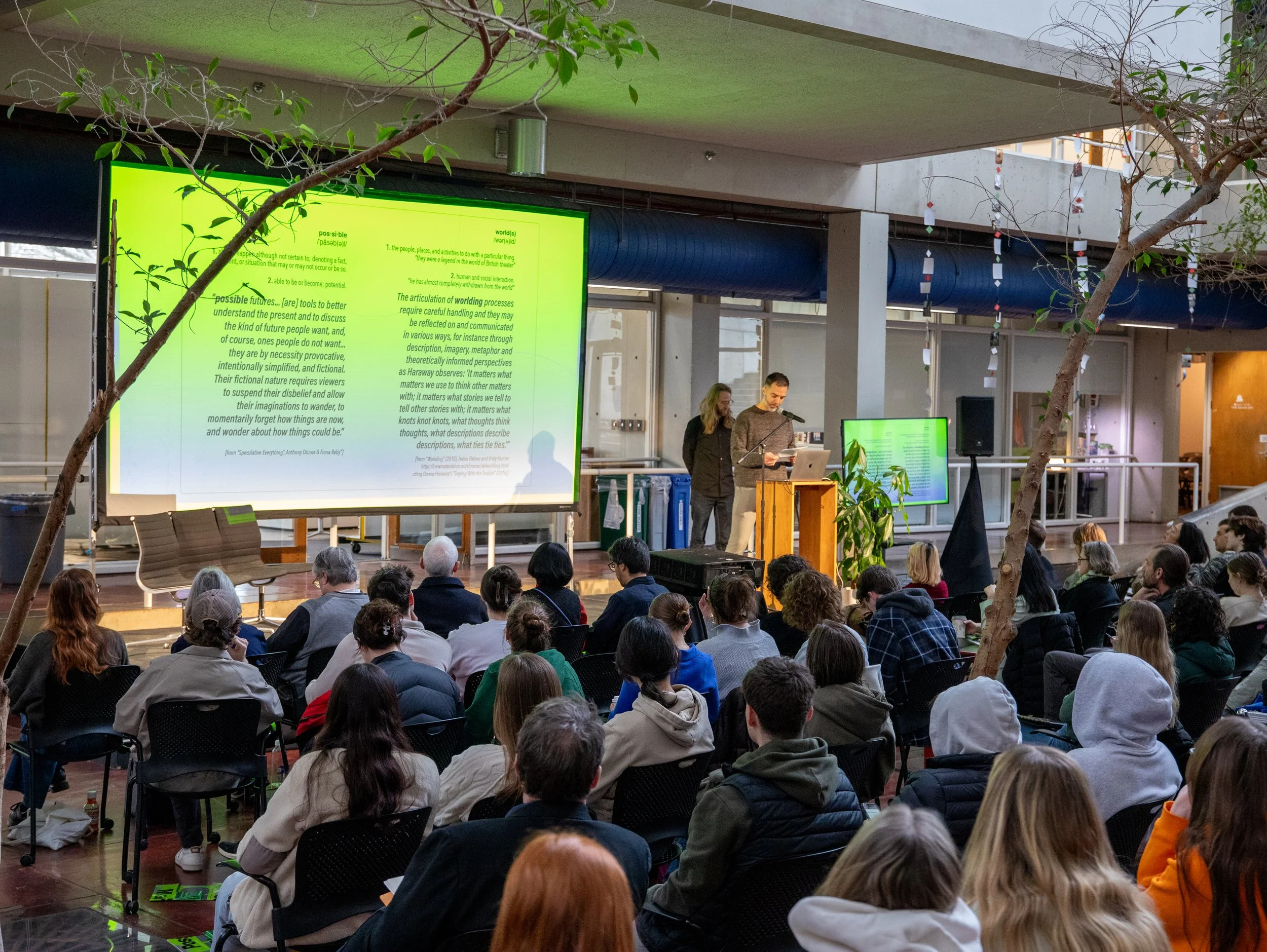
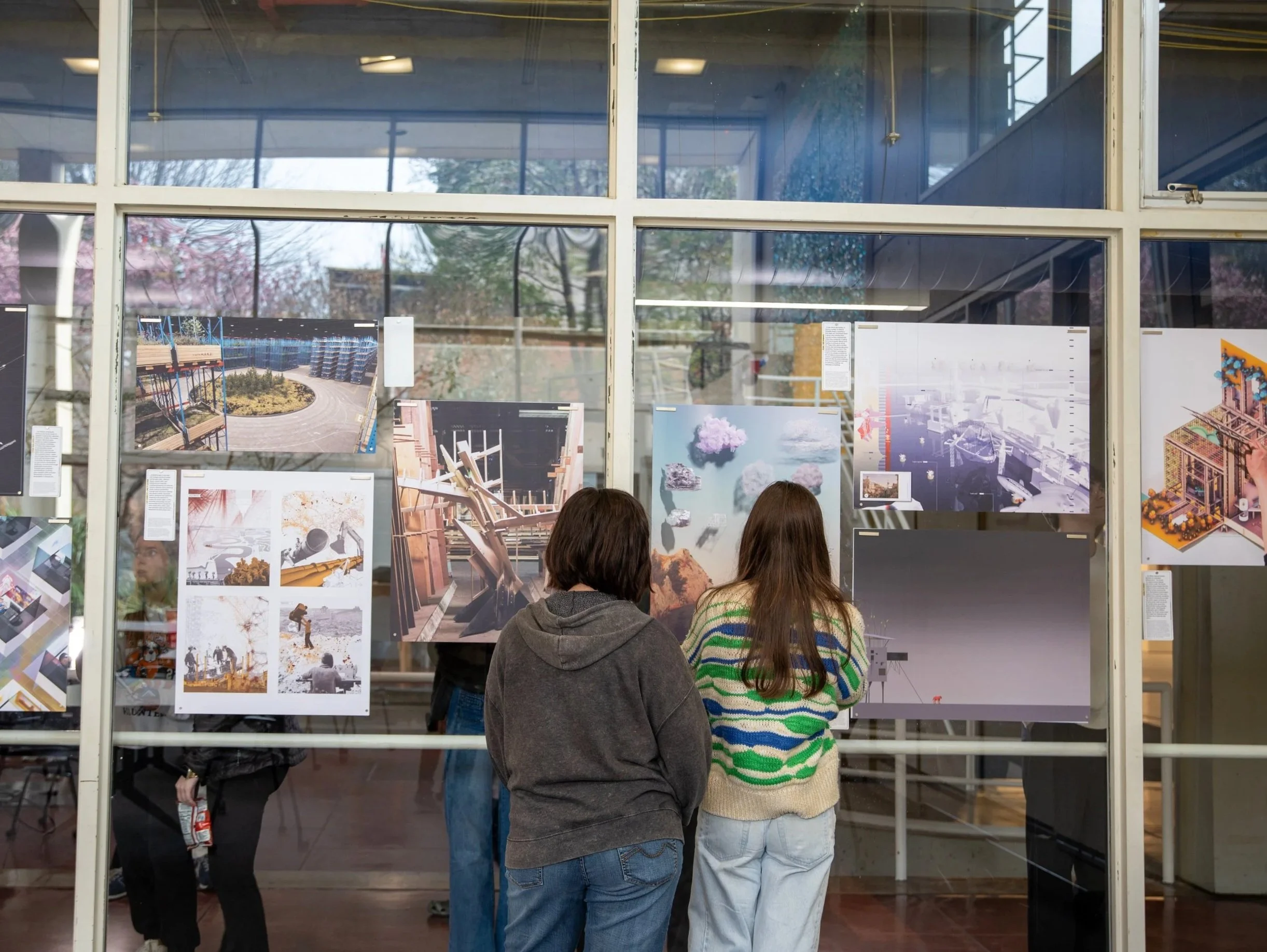
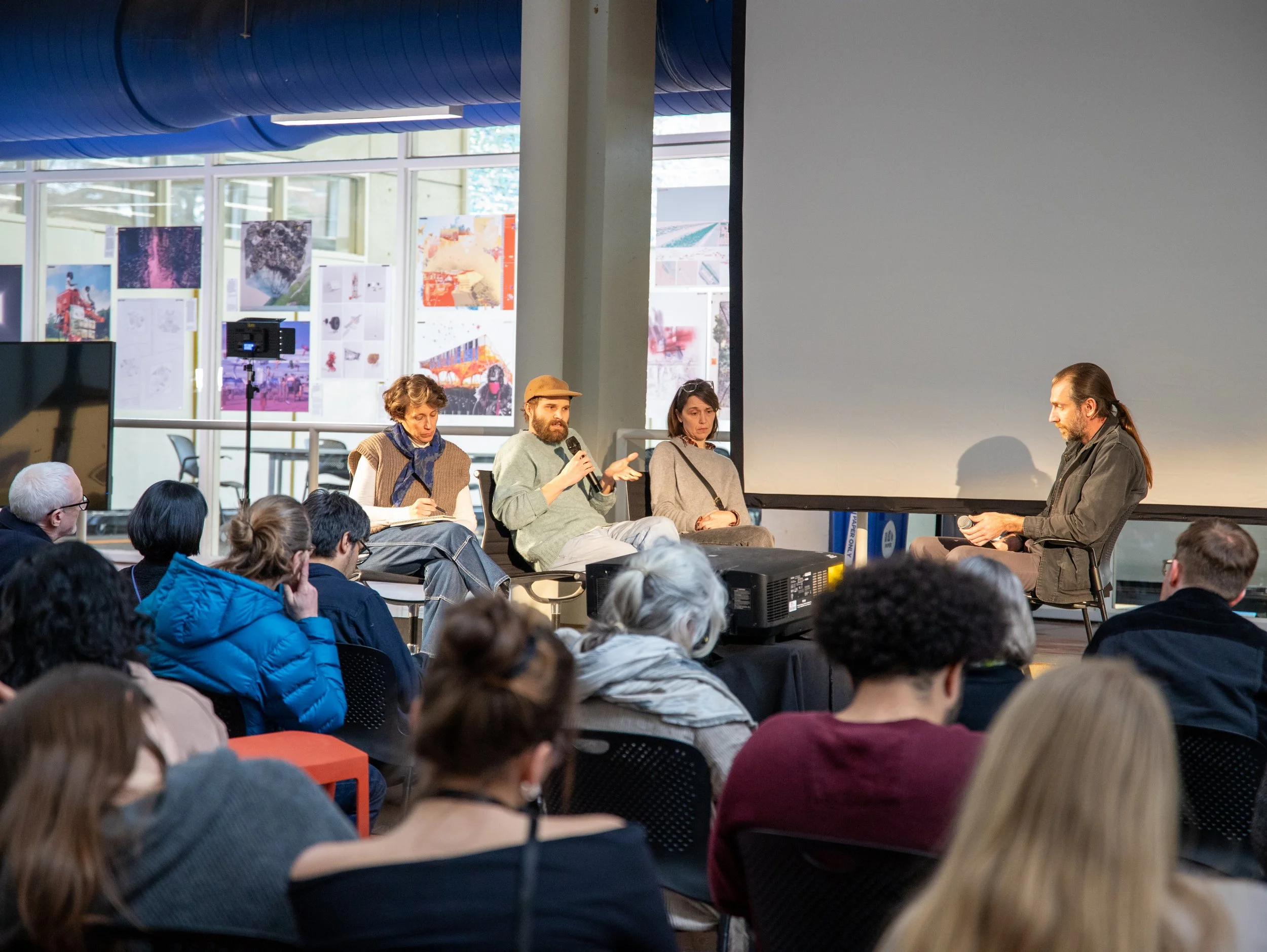
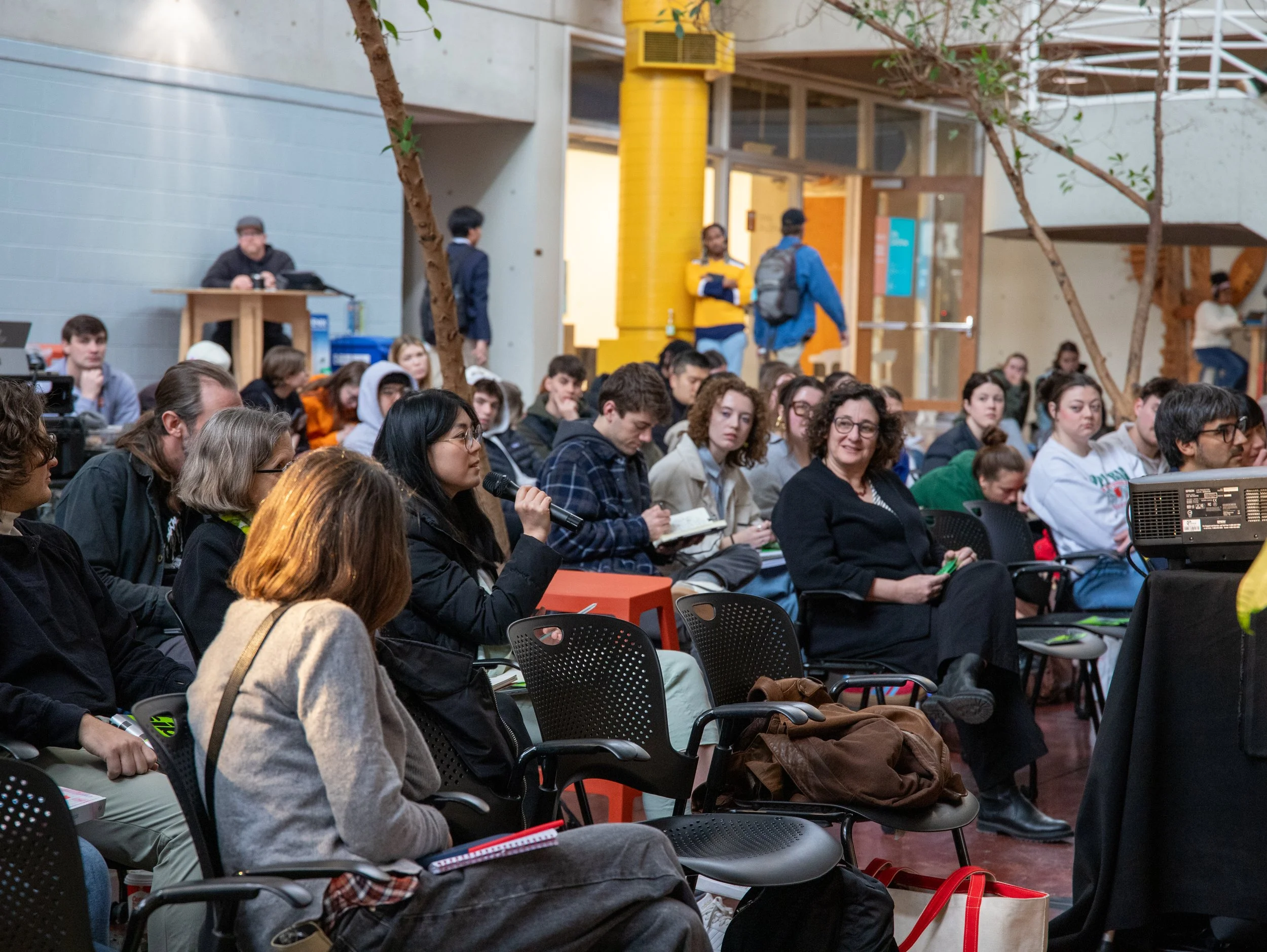
Possible Worlds was a symposium and exhibit held in March 2025 that convened critical conversations about the role of architecture and architects in crafting futures, projecting possibilities, and re-worlding the world. The event was organized around three distinct sub-categories: environmental imaginaries, material imaginaries, and social imaginaries. Rather than emphasizing their distinction, the symposium foregrounded how these imaginaries become enmeshed: In such worlds, material economies might be organized around ecologies; environmental questions might be sociopolitical by definition; and publics might be formed through their dealings with matter—cloud cultures, mud communes, logistical urbanisms, forest eschatology, consumerist statecraft, technoscientific zoologies, science infrastructures, metaverse commons.
We imagined the full scalar array—object, human, building, city, region, continent, globe—and spectrum of creative-intellectual discourses. Guests included designers and theorists focusing on a wide range of topics: game environments, media experiences, techno-sociality, labor, materiality, weather, objecthood, and geologic time. The speakers were Anthony Dunne (Keynote), Luke Pearson, Rhiarna Dhaliwal, Mark Stanley, Gabriel Vergara, Debbie Chen, Catty Dan Zhang, Stephanie Davidson, Elpitha Tsoutsounakis, and Chad Manley. The session moderators were Frances Hsu, Micah Rutenberg, and Jeremy Magner. These expert witnesses creatively theorized “worlding” and “possibility” in their varied ways, while an exhibit of drawings and images from other creative practitioners across the globe vivified and detailed the in-between through visualization, narrative, critical writing, and curation.
Acknowledgments:
Possible Worlds was realized thanks to the generous support of the UTK College of Architecture and Design. We are especially grateful to Dean Jason Young and School of Architecture Director Carl Lostritto for their enthusiastic support. Daniel Lewandowski was indispensable in providing event coordination and logistical assistance throughout the planning stages and execution. Thank you to the faculty, students, and staff whose participation helped make Possible Worlds a success. Finally, the event would not be possible without the thoughtful contributions of the symposium presenters and exhibitors.
Graphic identity + photography by Baxter Stults
Video production + editing by Dan Nugent and Laura Darnell
Web design by Jacob Gouveia